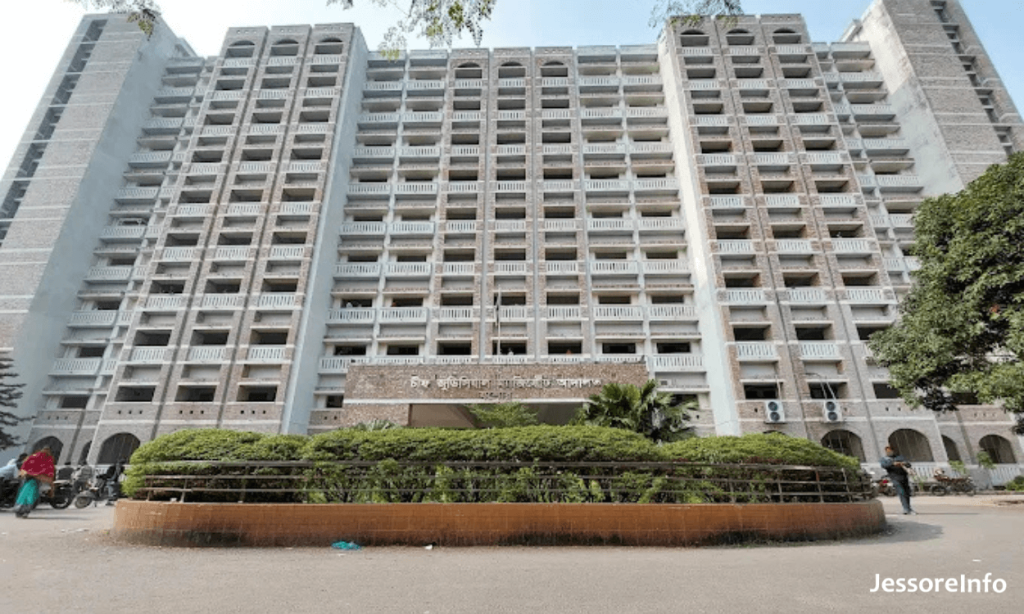
The Chief Judicial Magistrate Court Jessore is no ordinary building in Bangladesh’s judicial constellation. The main criminal court that opens all but a small fraction of criminal cases in the district. Whether you’re charged with stealing, domestic violence, fraud, or garden-variety assault, this is where you’ll go first.
Table of Contents
ToggleHere’s where it fits in the legal hierarchy:
District & Sessions Court: Deals with serious crimes (murder, rape, terrorism).
CJMC Jessore: Non-capital criminal cases, bail petitions and first appearances.
Senior/First-Class Magistrate Courts: Try less serious offences and assist in CJMC.
So what that means here in Los Angeles is that if you are walking into a courtroom, you are probably close to the beginning of your criminal case adventure.
Also Read: Jessore Judge Court
Historical Backbone
Jessore has been influential in Bangladesh’s judiciary since British rule. Institutions like CJMC were set up to maintain law and order, as well as help resolve local disputes. They were changed and developed over time to enlarge rights in law and to ensure that judgments were no longer arbitrary but had a legal basis.
In the post-liberation period, the CJMC Jessore gradually expanded to become a modern institution based on the CrPC to secure due process of justice and fair trial – accessible to citizens at their doorstep. It’s a mix of colonial legacy and changing legal norms.
Functions of the CJM
The Chief Judicial Magistrate is in many ways the CEO of criminal justice in this court. As of 2025, the CJM handles:
- Preliminary hearings: These are the starting point for all criminal cases, before they move to higher courts.
- Bail decisions: Whether the detainees are granted bail by the CJM under CrPC.
- Case management: From start to finish, overseas processes comply with the law.
- Management responsibilities: Distributes cases, supervises staff and oversees judicial officers such as senior magistrates or assistant magistrates.
A good CJM exercises discretion judiciously — weighing public order against constitutional rights. They are also supposed to defend the principles of justice trained by judicial leaders such as Mustafa Kamal, the 9th Chief Justice of Bangladesh, who stressed on independent judiciary and fairness.
Also Read: Jessore DC Office
Types of Cases You’ll Read About Here
The CJMC is not in the flashy political theater business. But it is where the real lives of real people are at stake — from the accused to victims in search of justice. Typical cases include:
- Theft, assault, vandalism, domestic violence.
- Drug possession, cybercrime, forgery.
- Breach of the peace offenses, such as unlawful assembly or riot.
- Bail applications, requests for trial remand, police investigation monitoring.
The vast majority of these cases are never heard by the High Court, but decide important legal issues about police conduct, bail eligibility and labor disputes.
Court Structure & Staff Hierarchy
A courtroom is no place for a one-man act. CJMC Jessore has a layered structure as follows:
- Chief magistrate: oversees procedure and key decisions.
- District Judges: Conduct trials on the merits.
- Judicial Magistrates: Hear cases on a day to day basis and record evidence.
- Prosecutors & Public Prosecutor: Speak what the state says.
- Inspectors of the Court & Police Stations: Supervise and take charge of security.
Each role is crucial. Court inspectors as well form the backbone of day-to-day workings; the maintainers of order and document fidelity.
How to Prepare If You’re Moving There
Lawsuits can feel daunting, but forewarned is forearmed. Here is a better process for whenever you must travel to appear in or bring a case:
- Bring the original documents — an identification, case papers, appointment letters.
- Get a criminal lawyer – procedural law is complicated and technical.
- Get there early – the courts can go from 9:00 AM and last until the evening.
- Observe court etiquette – behave in a respectful manner and dress accordingly.
Even a minor lapse can set back your case or harm your prospects for bail or reversal of conviction.
Why You Should Care About CJMC Jessore
Jessore is no mere district — it is an important link in the Khulna Division. The CJMC court affects the lives of thousands who come through its doors every year. Whether you’re a college student, professional, business owner, or someone who’s been swept up in the rush of an unfolding legal crisis, the choices made here shape movements, freedoms, and futures.
It also reminds us that justice is the foundation of civilized society — a principle with roots in tradition, but that has evolved over time.
Also Read: Jessore Kotwali Thana
The Chief Judicial Magistrate Court Jessore is not “any other” court. It’s a representation of law, fairness and social order, steeped in centuries of legal tradition but pointed toward the future. Here, justice is not just done — it’s ordered, methodical and circumscribed by the rule of law.
From arrest to bail to trial, this court is the first and most crucial battleground in Bangladesh’s criminal justice system. And for you, understanding how it works can mean the difference between victory and a never-heard-from-again judgment.