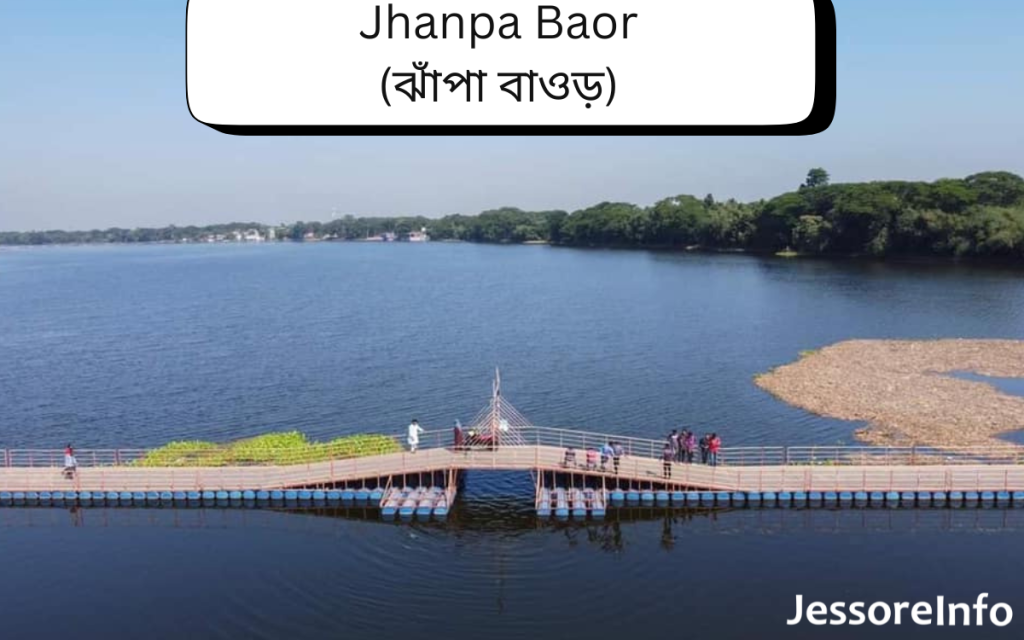
Jhapa Baor Jessore is an oxbow lake in Jhapa Union near Rajganj, within Manirampur Upazila. The lake is known for its rural landscape and the community-built floating bridges that connected settlements across the water and later became visitor attractions.
Anyone planning a visit should check the current condition of the floating bridge before travelling. A major section of the well-known bridge was severely damaged during a nor’wester on 16 April 2026, and no authoritative public confirmation of a complete structural repair was found during this update.
Current-status warning: Do not assume that every section of the Jhapa floating bridge is repaired, open or safe. Confirm access locally, obey barriers and instructions, and never enter a damaged or restricted section. The baor and surrounding area may still be visited even when bridge access is limited.
Jhapa Baor Information
| Name | Jhapa Baor |
|---|---|
| Bangla name | ঝাঁপা বাওড় |
| Location | Jhapa Union, Rajganj area, Manirampur Upazila, Jashore |
| Place type | Oxbow lake and rural visitor destination |
| Main attraction | Lake landscape and community-built floating bridges |
| Bridge status | Major storm damage reported on 16 April 2026; confirm current access locally |
| Current entry fee | No reliable current official fee verified |
| Official tourist hours | No fixed official visitor hours verified |
| Map | Open Jhapa Baor in Google Maps |
Where Is Jhapa Baor?
Jhapa Baor is located in Jhapa Union in the Rajganj area of Manirampur Upazila, Jashore. The Jhapa Union government portal identifies the baor as an important local historical and tourist location.
Because map services may display more than one pin for the baor, bridge or surrounding villages, check the route to the intended side of the lake before leaving.
View Jhapa Baor and the floating-bridge area on Google Maps
What Is a Baor?
A baor is an oxbow lake formed from an old curved section of a river. Such wetlands are common in parts of southwestern Bangladesh and often support fishing, agriculture, local transport and seasonal recreation.
Jhapa Baor is part of the landscape and daily life of surrounding communities. It should not be treated only as an amusement attraction; visitors should respect residents, fishing activity, private property and local access routes.
History of the Jhapa Floating Bridge
The floating bridge became widely known because it was built through a community initiative to improve communication for people living around the baor. Published reports describe a structure assembled from plastic drums, steel framing and metal sheets, with safety railings along the sides.
Reported measurements vary between sources and may refer to different versions or sections of the bridge. For that reason, this guide does not present one disputed length as an exact current measurement.
The bridge served a practical transport purpose before becoming a popular visitor attraction. The Jhapa Union tourism page refers to Jhapa Baor and more than one named floating bridge in the area, so visitors should not assume that every online photo shows the same structure or entrance.
April 2026 Storm Damage
On the evening of 16 April 2026, a nor’wester severely damaged the well-known floating bridge. Contemporary reporting stated that a large section broke apart and drifted into the baor.
Later social-media material indicates that people continued visiting the area, but this does not prove that every damaged section was professionally repaired or officially cleared for unrestricted use. A visitor should therefore verify the situation locally rather than relying on old photographs, videos or travel articles.
Safety Guidance
- Do not enter a section marked closed, damaged or restricted.
- Follow instructions from local authorities, bridge managers and residents.
- Avoid overcrowding one section of a floating structure.
- Keep children under direct adult supervision.
- Do not take motorcycles or other vehicles onto the bridge without clear local permission.
- Avoid bridge access during storms, strong winds, heavy rain or poor visibility.
- Wear suitable footwear because metal surfaces can become slippery.
- Do not lean over railings or enter the water from the bridge.
Floating structures can move with water and passenger weight. A section that appears usable from a distance may still have damaged connections or unstable surfaces.
How to Go to Jhapa Baor from Jashore
- Travel from Jashore city towards the Rajganj area of Manirampur.
- From Rajganj Bazaar, use a local vehicle for the final journey towards Jhapa village and the baor.
- Tell the driver which side of the floating-bridge area you want to reach.
- Use the map link for general navigation and confirm the final road with local residents.
Road conditions, routes and local fares can change. Ask the fare before boarding and avoid relying on old published bus or easy-bike prices. If returning late in the day, arrange transport in advance because vehicle availability may decrease.
Entry Fee and Visiting Hours
Older travel pages mention small bridge-entry fees, but no dependable current official price could be verified. Do not present an old ৳5 or ৳10 amount as the current ticket price.
No fixed official tourist opening hours were found either. Daylight visits are more practical for navigation and safety, but daylight does not guarantee that the bridge is open.
Ask locally about:
- Whether the bridge is currently open
- Which sections visitors may use
- The current entry or maintenance fee
- Whether parking is available
- Whether a boat service is operating
- The safest route back to Rajganj
Boat Rides and Fishing
Boats may be used locally on the baor, but a reliable official visitor schedule, fare or safety standard was not found. Availability should not be guaranteed in advance.
If arranging a boat trip:
- Ask who operates the boat and agree on the fare beforehand.
- Use a life jacket where available.
- Do not board an overloaded or visibly damaged boat.
- Avoid boating during strong wind, rain or darkness.
- Keep children seated and supervised.
Fishing is an important local activity, but visitors should not assume they may fish anywhere. Ask permission and confirm local rules before using fishing equipment.
What to Bring
- Drinking water
- Sun protection or rain protection depending on the forecast
- Comfortable, non-slip footwear
- A charged mobile phone and power bank
- Small change for local transport or authorised fees
- Any medicine required during the trip
Food shops or other facilities may not be consistently available. Take your waste with you if no proper disposal point is provided.
Responsible Visiting
Jhapa Baor supports local livelihoods and community movement. Visitors should avoid blocking access, entering private land, disturbing fishing equipment or leaving plastic waste near the water.
Ask before photographing residents at close range. Drone use should not be assumed to be permitted, particularly near homes, crowds or restricted areas.
Frequently Asked Questions
Where is Jhapa Baor located?
Jhapa Baor is in Jhapa Union near Rajganj, within Manirampur Upazila of Jashore District.
Is the Jhapa floating bridge currently open?
A major section was damaged by a storm on 16 April 2026. Later visitor posts exist, but no authoritative confirmation that every section is repaired and unrestricted was found. Confirm locally before travelling.
Can visitors still see Jhapa Baor if the bridge is closed?
The baor and its surrounding landscape remain in the area, but access to particular banks, bridges or viewpoints may be limited. Follow local instructions.
How much is the bridge ticket?
No reliable current official ticket price was verified. Older prices found online should not be treated as current.
Are boat rides always available?
No. Boat availability, fares and safety arrangements were not confirmed through an official current source. Ask locally and prioritise safety.
Can I take a motorcycle across the floating bridge?
Do not take a motorcycle onto any floating section without clear local permission and confirmation that the route is currently safe and open.
Is Jhapa Baor suitable for children?
Families may visit the area, but children require constant supervision near the water and floating structures. Avoid damaged, crowded or slippery sections.
What is the best time to visit?
A daylight visit in suitable weather is the safer option. Avoid storms, strong winds, heavy rain and low visibility, and confirm bridge access before starting the journey.
Information Sources and Update Note
Location and tourism status were checked against the Jhapa Union government portal. Historical bridge information was compared with national and local reporting. The storm-damage warning is based on reporting published on 17 April 2026 about damage that occurred the previous evening.
Information checked: 14 October 2026. Because repair and access conditions can change, verify the bridge’s status locally before travelling.