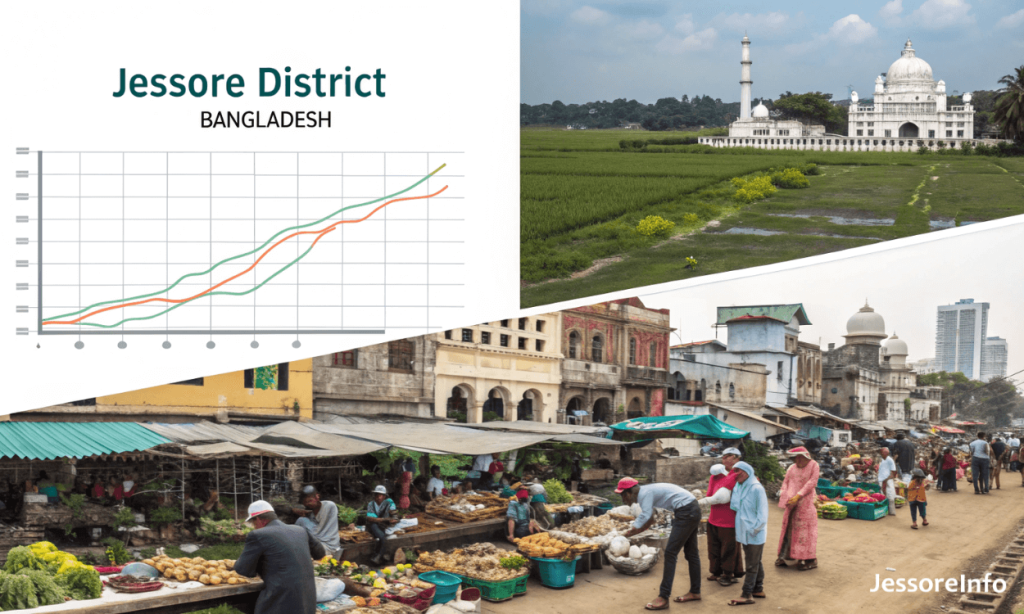
Jessore is one of the major districts of Khulna Division, in southwestern Bangladesh. Known for its historical affiliation with agriculture and commerce, it is home to people of different religions who live together in a cultural melting pot. Over the years, the population of Jessore District has grown steadily, reflecting the region’s tremendous progress in living standards and human development indicators. This article examines the most recent data on its population, growth patterns, density, and age structure, and what those trends mean in comparison to other regions.
Table of Contents
ToggleWhat’s the Population?
Population of Jessore District has a total population of 3,076,144 as per the Census Report of 2022 by Bangladesh Bureau of Statistics. These individuals reside in 798,032 households at an average household size of approximately 3.79 persons per household.
Also Read: What is Jessore Famous for
Area & Population Density
Jessore District is the largest of the southern districts of Bangladesh and it stretches across about 2,606.94 km². According to this estimate, its density is approximately 1,180 people / km². That’s relatively high compared to many rural areas, but it is typical of Bangladesh, where the land is densely populated.
Demographics & Age Structure
- Young children aged under 10 years make up approximately 16.58% of the population.
- Sex ratio: Approximately 1,018 females per 1,000 males. A slight majority female, but very close.
- Literacy is at approx. 77.07 % (age 7 and above), which is higher than the national average of (~74.8%).
- Urban population: About 23.39% of the city’s population is rural (annual surplus – over 75%).
Historical Trends & Growth
Looking backward:
Census Year | Population of Jessore District |
1991 | 2,193,000 |
2001 | 2,586,771 |
2011 | 2,764,547 |
2022 | 3,076,144 |
So, the population in the district has been growing. Between 2011 and 2022, it increased from some 2.76 million to ~3.08 million — an approximately 11%–12% growth over the course of eleven years. (Not crazy explosive growth, but steady.)
Religious/Ethnic Composition
- Jessore is overwhelmingly Muslim — approximately 89.62% as of 2022.
- The same census places the percentage of Hindus at about 10.19%.
- There are smaller numbers of other religions.
There are small shares of ethnic minority (non-Bengali) groups as well, but not to the extent of the kind of religious categorizations; ethnic diversity is relatively less visible in census data.
Also Read: Famous Person of Jessore District
Why These Numbers Matter
It’s more than trivia to know the population of Jessore. Here’s why:
Resource & Infrastructure Planning
With ~3 million inhabitants, the pressure on basic services like health, water, sanitation and roads is immense. Population density is a stressor, too: Services need to be more accessible and robust.
Education & Literacy Gains
Literacy that is above national averages is a good thing. But from a demographic standpoint, there’s a huge chunk (16-17%) under the age of 10. Schools, teachers and learning resources will have to keep pace.
Urbanization Pressures
Only about a quarter of the population is urban. With urbanization (as with storm damage), populations might decline in the countryside while towns need to expand services quickly — housing, sanitation, transportation.
Social Services & Demographic Dividends
The size of the working‐age (15–64) population is substantial. Applied in the right way, this could be a growth stimulus. But if infrastructure, health care or jobs are missing, the opportunity is squandered.
Cultural & Community Dynamics
Religious and ethnic composition is useful for cultural policy, social cohesion and minority rights. For instance, maintaining the voice, for keeping the pride and so on..
Comparison: Jessore vs National Averages
- The illiteracy rate of Jessore is also lower than the national average. 77% are litigation in Jessore whereas Bangladesh litigation avg. 74.8.
- The population density in Jessore (~1,180/sq km) is still higher than in most other districts in Bangladesh. The national average is lower.
Looking Forward
Here’s what to watch for in Jessore’s demographic future:
- Growth rate: Are we speeding up in our growth or slowing down? Slower growth means more focus on quality of life, as opposed to service expansion.
- Urban growth: If more people are moving into Jessore Sadar or other pourashavas (towns), that changes land use, traffic volume, and housing demand.
- Migration: Both internal (rural → urban) and cross-border (given a neighbor like India) can change population numbers unpredictably.
- Climate & Environment: Flooding, rivers and environmental change could lead to internal displacement or impact agricultural productivity — which in turn may affect population distribution.
Also Read: Jessore Village List
Today, Jessore District is home to more than 3 million people covering an area of ~2,600 km 2. Notable assets: that it has a relatively high literacy rate, a young population and great cultural diversity. Challenges: managing density, extending urban services, controlling migration and ensuring sustainable growth.