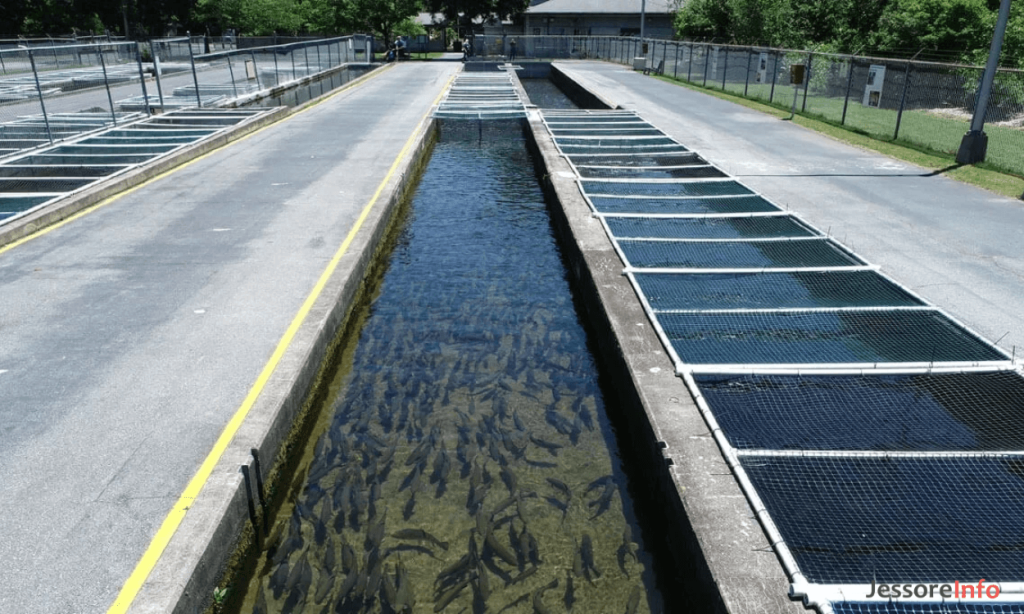
Jessore Fish Hatchery is a true powerhouse. The Chanchra/Chachra area provides almost 70% of Bangladesh’s fish fry (little fish babies) requirement, and it is said that around 15–18 tonnes (that’s 400–500 maunds) of fries are daily pushed through the Bablatola market. The business is huge – every day 50–60 trucks carry fries worth 1.5–2 crore taka. This nonstop hustle keeps about 2,000 people employed, ranging from loaders to hatchery workers.
Table of Contents
ToggleWhat’s Swimming Out of Jessore
It’s all about variety. Jessore hatcheries churn out:
- Major Indian carps: Catla, Rohu, Mrigal
- Catfish such as Shingal, Tengra, Pabda, Gulsha, and yes, even Tilapia
Latest figures from 2023 record more than 1,065 tonnes of fry and 70 tonnes of hatchlings harvested across 34 farms: everything from big carp to exotics.
Also Read: Jessore famous places
Challenges That Make Hatchery Life Real
Even legends have their struggles:
- In 2023, only 25 of 46 hatcheries entered production, down from 34 last year. There were 78 less than five years ago. Why not? Soaring input costs (think hormones and electricity), harsh heatwaves and climate headwinds.
- A savage heat wave in May 2025 — with temperatures reaching 40 °C — killed fry and halted production. Optimal fry-temp sweet spot: 25–30 °C. Hatchery owners employed shading techniques such as growing bananas and sedges.
- A grim 2019 flashback: two-thirds of Jessore hatcheries shuttered because of brood stock shortages, skyrocketing lease rates, fuel and electricity cost increases, and pressure on natural resources.
Biosafety & Hatchery Sanitation: The True Heroes
It’s not all hustle here in Jessore — they’ve got game:
- Most hatcheries are clean nuts: 76% of them keep it clean, disinfect gear, and use disease-free broodstock. Many even quarantine new stock.
- Diseases are still a thing. 34% hit with Lernaeasis 24% with Argulosis 11% along with other ugly parasites. Fry and fry brooder mortality rates are approximately 9–15%, especially occurring in the colder period.
- Yet training is behind — only approximately 33 percent of operators have gone through any. Many hatcheries still lack labs, or the technical expertise, to do disease analysis.
Water Quality & Profit: Let’s Look at the Numbers
Science pays off: A 2016 Ma-Fatema Fish Hatchery study shows how and how much:
- Water temps: brood ponds 19-26°c, hatching jars 18-24°c; pH circa 6.8-7.9; Dissolved Oxygen 4.8-6.7 mg/L
- Return Ratio: 1.54 Jan, 1.32 Feb, 1.23 Mar — Earnings BDT 16k-50K per month.
Also Read: Jessore City History
What’s Dragging Jessore Down (And How to Fix It)
Here’s the tough truth:
- A lack of capital to make upgrades, poor training and no lab facilities — serious obstacles.
- Diseases such as Argulus can kill up to 95% of hatchlings, and operators sometimes have no other option than pesticides.
- Climate stress — heatwaves, droughts, unpredictable rains — make life in the hatcheries uncertain.
- In addition to inconsistent broodstock practices, proprietary information and inbreeding are silently wreaking havoc on quality, in addition to inconsistent broodstock practices.
How to course-correct:
- Funnel training programs to make it easier to get into the lab.
- Farmers were offered subsidized loans, power at agricultural rates and a fair price for broodstock and hormones.
- Promote good water management (shade belts, shade-growing aquatic plants) and invest in water quality monitoring devices (IoT, sensors). Smarter hatcheries survive climate shocks.
Why Jessore Matters
Without Jessore’s hatcheries:
- Bangladesh fish fry supply chain breaks down —food insecurity, farmer losses and disrupted supply chains.
- Thousands lost their jobs. It’s a micro-economic powerhouse.
- Sustaining and upgrading the HUBs equals protecting national food security, increasing GDP, & acknowledging the aquaculture heritage of our region.
“Jessore fish hatchery” is more than a phrase — it’s a complete ecosystem. These hatcheries are fish-rearing juggernauts that produce seafood for the nation, a center of livelihood in rural areas and a proving ground for advanced fish tech. But they’ve got to get some stronger support in financing, training, disease control, and infrastructure to surf this wave.
Frequently Asked Questions
1. Where is Bangladesh’s biggest fish hatchery hub?
Ans: Jessore.
2. How much of Bangladesh’s fry comes from Jessore?
Ans: 70%.
3. How many tonnes of fry are traded daily at Bablatola market?
Ans: 15–18 tonnes.
4. How many people work in Jessore hatcheries?
Ans: 2,000.
5. What fish types are produced in Jessore hatcheries?
Ans: Carp, catfish, and tilapia.
6. How many hatcheries were active in 2023?
Ans: 25.
7. What’s the ideal water temperature for fry?
Ans: 25–30 °C.
8. What hit hatcheries during May 2025?
Ans: Heatwave.
9. What are some common fish diseases in hatcheries?
Ans: Lernaeasis, Argulosis.
10. What’s the fry mortality rate?
Ans: 9–15%.