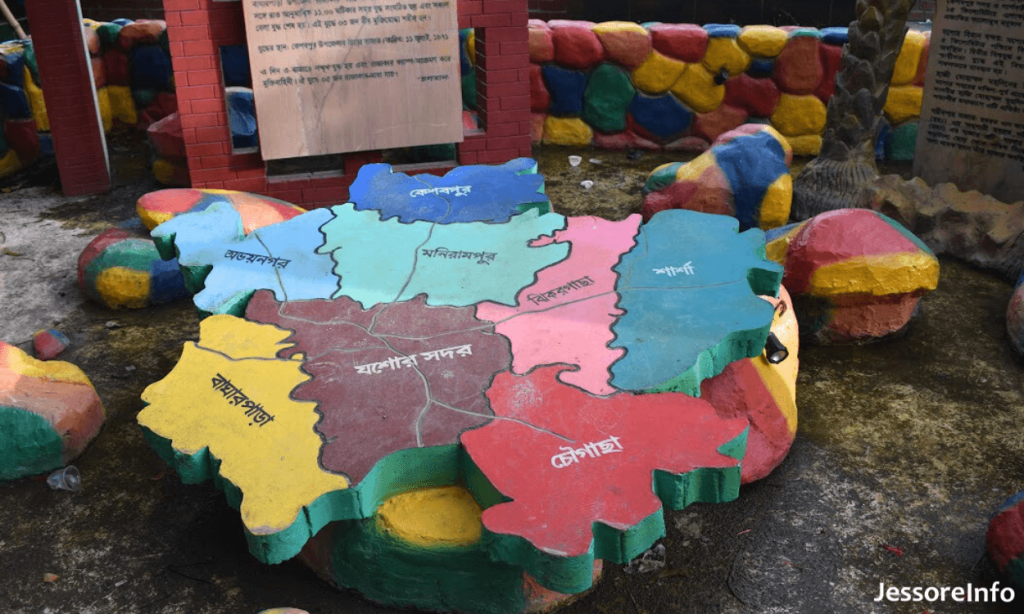
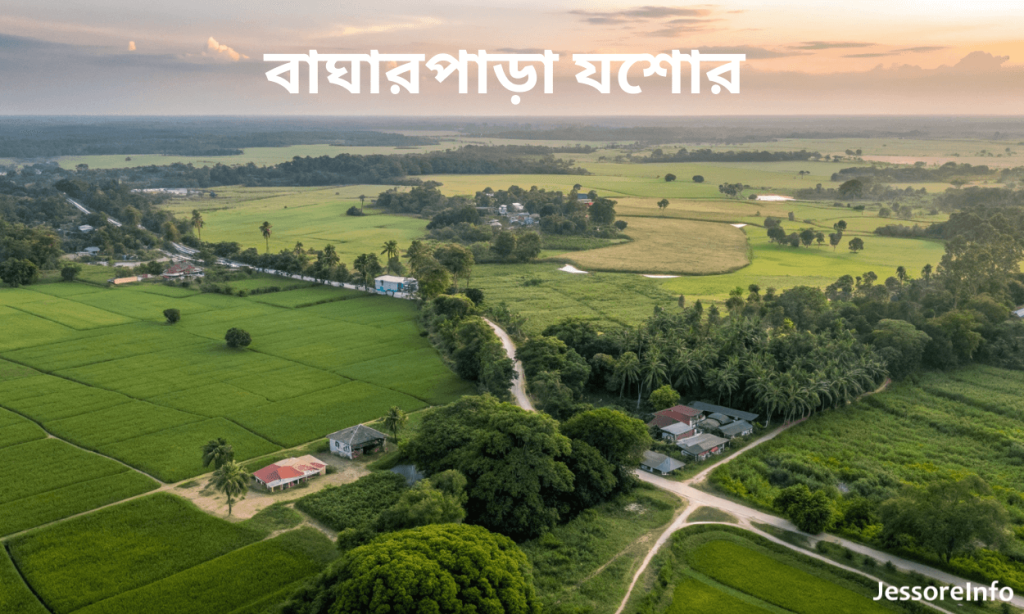
Bagharpara Jessore is a sub-district situated in Jessore District of Khulna Division in southwest Bangladesh. It stands on 308 km² of area and on the north, it is surrounded by Jhenaidah, on the east, Narail and Magura and on the west, Jessore Sadar.
Table of Contents
TogglePopulation & Demographics
As of 2022, Bagharpara had a population of approximately 238,106, and a density of almost 770 people per km². Religion: about 85% Muslim, 15% Hindu It is 52–53% literate, higher than Bangladesh’s national average.
Land & Livelihood
About seven-twelfth of farmers, Agriculture is the mainstay of the economy of Bagharpara. The principal crops are rice (paddy), wheat, mustard, jute, potatoes, sugarcane, chillies, and numerous vegetables. Fruit lovers will get to see the outside developing of mangoes, jackfruit, bananas, Litchis, and papayas.
Also Read: All Villages in Jessore
Waterways & Transport
This upazila is blessed with many rivers such as Chitra, Bhairab and many canals such as afra and Daitala which supplies irrigation to fields as well as play a vital role in everyday family life. The roads comprise 135km paved, 70km semi-paved and 482km dirt roads. Finally, a new rail station (Jamdia Railway Station) was opened in December 2024 re-connecting Bagharpara to the Dhaka–Jessore line.
Education
Several educational institutions make Bagharpara shine in the education field:
- Bagharpara Degree College (founded 2015) Honours-level courses are offered at the Second Level (1972) level.
- Bagharpara Mohila College (Founded in 1969) A women’s honours college (B.A.
- Bagharpara Pilot High School (est. Pilot Girls’ High School (est. 1970) 1975).
- A number of other schools and madrasas backed it.
These institutes contribute for literacy and youth education are more than 50%.
History & Culture
Bagharpara has a rich history:
Other notable features include Zamindar Bari (Telkup), several old mosques like Bara Khudra and Katurakandi, and temples like Bara Khudra Kali Mandir and Narikelbaria Kali Mandir, which are considered archaeological and religious landmarks.
In 1971, the same space became the centre of fierce battles in the Liberation War. At Sekanderpur on 8 December, freedom fighters and Razakars met in combat–several freedom fighters lost their lives and hordes of Razakars died there. On 7 December, it was the Bagharpara connection
Recent developments In 2017, high-profile war crimes trials were held, with seven people from Bagharpara sued over alleged 1971 atrocities.
Attractions & Events
- Local devotees flock to the Kaludanga Temple in Dohakula Union.
- Seasonal fairs: Kaludanga Baishakhi Mela, Narikelbaria Jhulan Mela, etc.
- Weekly hats and bazaars at Charabhita, Narikel Baria, and Khajura with its vibrant market.
Development & Infrastructure
- Bagharpara integrated with Padma Rail Link project—connectivity and economic growth of the area.
- Among the recent government investments is the development of Bagharpara Degree College under the ICT enhanced modernization program that was inaugurated by EX. PM Sheikh Hasina.
Why Bagharpara Matters
- An agritown, as it provides crops and fruits to the region.
- An educational center with increased transport access.
- A press that bore witness to important moments of freedom and was steeped in history and culture.
- Now via development projects and better connectivity.
Bagharpara Jessore is a rural sub-district of modern Bangladesh which can be a model place for where farmland, schools, heritage sites and modernising infrastructure are co-enjoying and striving; these all things represent a combination of rural Bangladesh and modernisation. Be it history, local markets or upazila level development — Bagharpara has a story to tell.
Frequently Asked Questions
1. Where is Bagharpara located?
Ans: In Jessore, Khulna Division.
2. What is the area of Bagharpara?
Ans: 308 km².
3. What is the population?
Ans: Around 2.38 lakh.
4. What is the literacy rate in Bagharpara?
Ans: 52–53%.
5. What is the main occupation in Bagharpara?
Ans: Farming.
6. What are the main crops of Bagharpara?
Ans: Rice, jute, potatoes, etc.
7. Which fruits are grown in Bagharpara?
Ans: Mango, jackfruit, banana.
8. Which rivers flow through Bagharpara?
Ans: Chitra and Bhairab.
9. Is there a railway station in Bagharpara?
Ans: Yes, Jamdia Station.
10. What are the key educational institutions in Bagharpara?
Ans: Degree & Mohila College.