Jessore Collectorate Building, officially associated with the Jashore district administration, is one of the city’s best-known historic landmarks. The long colonial-era structure stands in the Doratana area and continues to form part of an active government compound.
This guide explains the building’s history, location, architectural character and what visitors should know before going. Because it remains an administrative site, public access may depend on current office rules, security arrangements and official activities.
Quick answer: Jessore Collectorate Building is a historic British-period administrative building in Doratana, Jashore. The present structure is commonly dated to 1885, although the history of the district Collectorate began much earlier.
Jessore Collectorate Building at a Glance
| Official English spelling | Jashore Collectorate Building |
|---|---|
| Common search spelling | Jessore Collectorate Building |
| Bangla name | যশোর কালেক্টরেট ভবন |
| Location | Doratana, Jashore Sadar, Jashore, Bangladesh |
| Building type | Historic administrative building |
| Present structure | Commonly dated to 1885 |
| Current use | Part of an active government administrative compound |
| Entry fee | No dependable official visitor-fee information found |
| Visitor hours | Not published as fixed tourist hours; access may be restricted |
| Map | Open in Google Maps |
History of Jessore Collectorate Building
The history of the Collectorate should be separated into two parts: the beginning of district administration and the construction of the building visible today.
Establishment of the district administration
Jashore developed as an important district headquarters during the early period of British East India Company administration. Historical accounts connect the establishment of the Collectorate administration with Tillman Henckell, who served as an early district administrator in the 1780s.
The Collectorate was responsible for administrative work that included revenue management. Its offices did not necessarily operate from the present building throughout this entire early period.
Construction of the present building
Different dates are sometimes attached to Jessore Collectorate Building because sources mix the establishment of the Collectorate, an earlier building at the site and the present structure.
Reliable local reporting commonly dates the existing British-style building to 1885. Earlier dates such as 1786 or 1801 relate to the development of the Collectorate administration or earlier offices and should not automatically be presented as the construction date of the complete building seen today.
Architectural Features
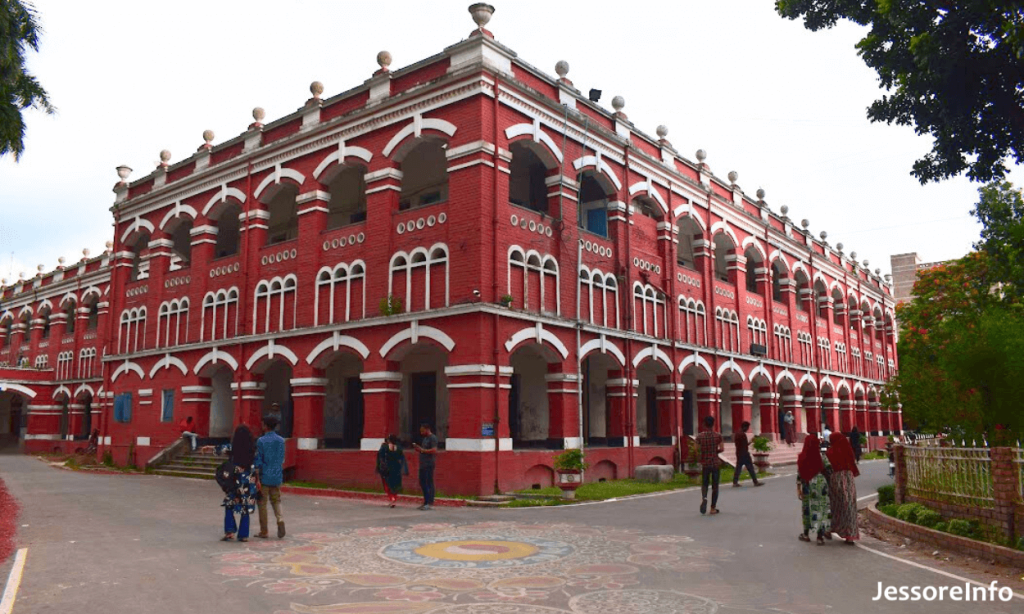
The Collectorate Building is recognised for its long, balanced exterior and colonial-period administrative design. Visible characteristics include:
- A long two-storey form
- Repeated doors and windows along the exterior
- Extended corridors and verandas
- Arched architectural details
- A traditional red-toned exterior
- An open administrative compound around the building
The large number of openings has also led to the popular local description “360-door building.” This should be understood as a widely used heritage description rather than a confirmed modern architectural count.
Why the Building Is Important
The building is significant for more than its appearance. It represents the long administrative development of Jashore and remains connected to the district’s present-day government activities.
Its importance includes:
- Administrative history: The site reflects the evolution of district-level administration in Jashore.
- Architectural value: It is a surviving example of a large colonial-period government building.
- Continuing use: Unlike an abandoned monument, the compound remains connected to active public administration.
- Local identity: Images of the building are frequently used to represent Jashore’s history and urban heritage.
Location and Map
Jessore Collectorate Building is in the Doratana area of central Jashore. The surrounding zone contains government offices and other important city locations.
Get directions to Jessore Collectorate Building
Map pins can occasionally point to a general area of the compound rather than a particular public entrance. Follow local signs and security instructions after arrival.
How to Reach the Building
From central Jashore, the Doratana area can normally be reached by rickshaw, auto-rickshaw or another local vehicle. Tell the driver that you are going to “Collectorate Bhaban” or the district administration compound.
If travelling from outside Jashore, first reach the city by your preferred transport and then use a local vehicle for the final part of the journey. Travel time depends on the starting point, traffic and the entrance being used, so fixed journey times have not been stated here.
Visitor Guidance
The Collectorate is not an ordinary ticketed tourist attraction. It is a working government site, and visitors should behave accordingly.
- Do not enter restricted offices or corridors without permission.
- Follow instructions from security personnel and government staff.
- Ask before photographing offices, staff, documents or secured areas.
- Avoid interrupting administrative work.
- Do not assume every section of the building is open to visitors.
- Keep the compound clean and use designated public areas.
Public access can change during official programmes, public holidays, security operations or maintenance work. If you need to enter for administrative purposes, confirm the correct office and current government working schedule in advance.
Photography Tips
The building’s long facade, repeating arches and surrounding open space make it an interesting subject for architectural photography. Daylight generally provides a clearer view of exterior details.
Photography should be limited to areas where it is permitted. A visitor should never photograph sensitive offices, official documents or security arrangements without approval.
Nearby Places
Visitors exploring central Jashore may also be interested in the Jashore Institute Public Library and other historic or civic locations around the city centre. Check each location’s current access conditions separately rather than assuming that all nearby sites follow the same schedule.
Frequently Asked Questions
Where is Jessore Collectorate Building located?
It is located in the Doratana area of Jashore Sadar, Bangladesh. Use the linked Google Maps search for directions to the administrative compound.
When was Jessore Collectorate Building built?
The present British-style structure is commonly dated to 1885. Earlier dates found online may refer to the establishment of the Collectorate administration or earlier offices rather than the complete building visible today.
Is Jessore Collectorate Building still used?
Yes. It remains associated with the active district administration compound, so access to offices and internal areas may be controlled.
Is it a museum?
No. It should not be described as a public museum. It is a historic administrative building that continues to have government functions.
Is there an entry fee?
No dependable official tourist-entry fee could be verified. Access to particular areas may be restricted regardless of whether a fee is charged.
What are the visitor hours?
No fixed official tourist hours were found. Government working hours do not guarantee tourist access, so visitors should follow current instructions at the site.
Can visitors take photographs?
Exterior photography may be possible from permitted public areas, but visitors should obey security signs and request permission before photographing offices, staff or restricted sections.
Are “Jessore” and “Jashore” Collectorate Building different places?
No. Jashore is the current official English spelling, while Jessore remains widely used in searches and older English references.
Information Note
Historical dates for the Collectorate are sometimes presented inconsistently because the establishment of the administration, earlier offices and the construction of the present building are treated as one event. This guide keeps those stages separate and avoids claiming unverified opening hours, fees or unrestricted public access.
Sources: Jashore District Administration’s tourist-spot listing, Jashore Sadar government portal and historical reporting by The Daily Ittefaq.